Thinking about a home in ArrowCreek but not sure which style fits you best? Between the foothill setting, golf vistas, and HOA design rules, homes here follow a distinct look and feel. You want a property that blends views, indoor-outdoor living, and long-term value without surprises. This guide breaks down ArrowCreek’s common home styles, product types, approved materials, and how the land itself shapes floor plans so you can choose with confidence. Let’s dive in.
What shapes ArrowCreek architecture
ArrowCreek is a master‑planned, gated community in the southwest Reno foothills with two championship courses, a Residents’ Center, and miles of open space. The setting and community standards are a big part of the architecture you see. Explore the community backdrop on the ArrowCreek HOA site.
The Architectural Design Review Committee (ADRC) sets the rules for exterior form, materials, colors, and how homes fit the land. The current guidelines outline acceptable walls, roofs, windows, and even how to handle slopes and landscaping. When you hear that ArrowCreek homes “blend into the hills,” that is by design. For specifics, review the ADRC Guidelines.
Product types you’ll see
ArrowCreek includes a mix of production, semi‑custom, and fully custom homes. Each path offers a different balance of choice, timeline, and lot size.
Production and nearby semi‑custom neighborhoods
Builders just outside or along Arrowcreek Parkway offer pre‑designed plans with curated finishes and smaller lots, which keep maintenance lower. A good example is the Courtyards at Arrowcreek Parkway by Tim Lewis Communities. Plans often feature two stories, open great rooms, covered patios, and three to four bedrooms. This route suits you if you want a newer home with a more defined build process and predictable costs.
Semi‑custom builder homes inside ArrowCreek
Within the gates, larger builder plans have historically offered options like main‑level suites, bonus rooms, and multi‑car garages on mid‑sized lots. Typical living areas run roughly 2,500 to 4,500 square feet for this category. You get some design flexibility without taking on a full custom build.
Custom and fully custom estates
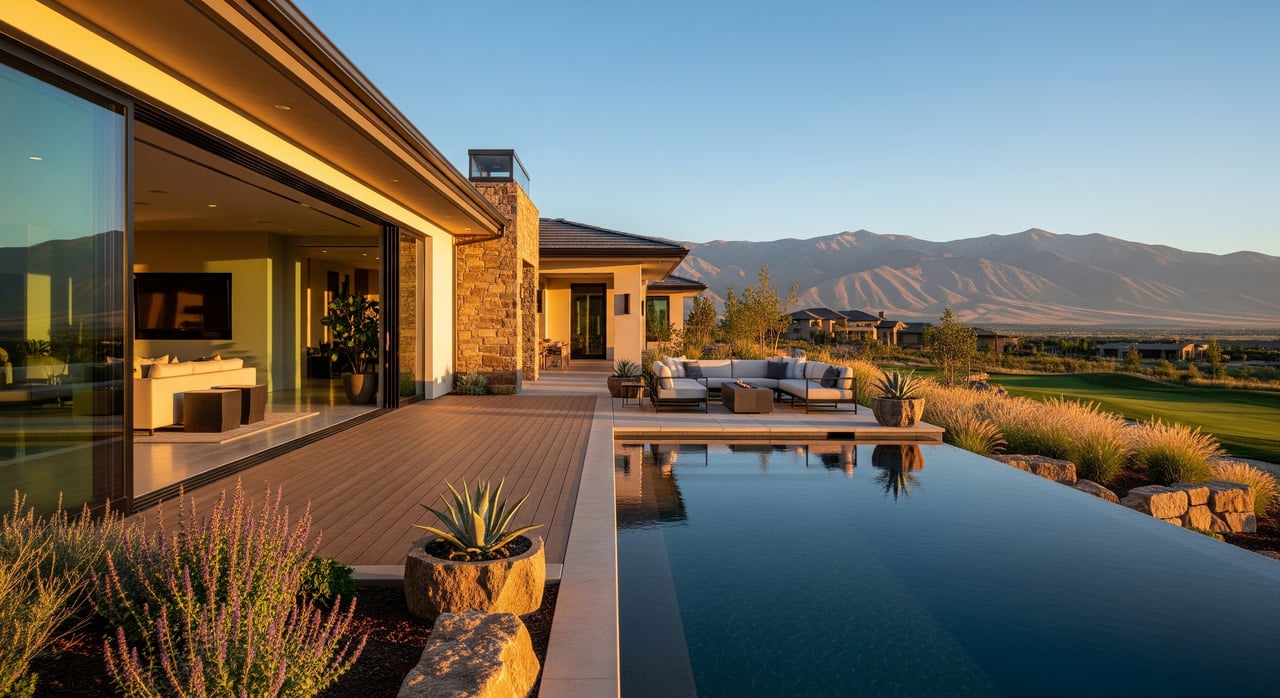
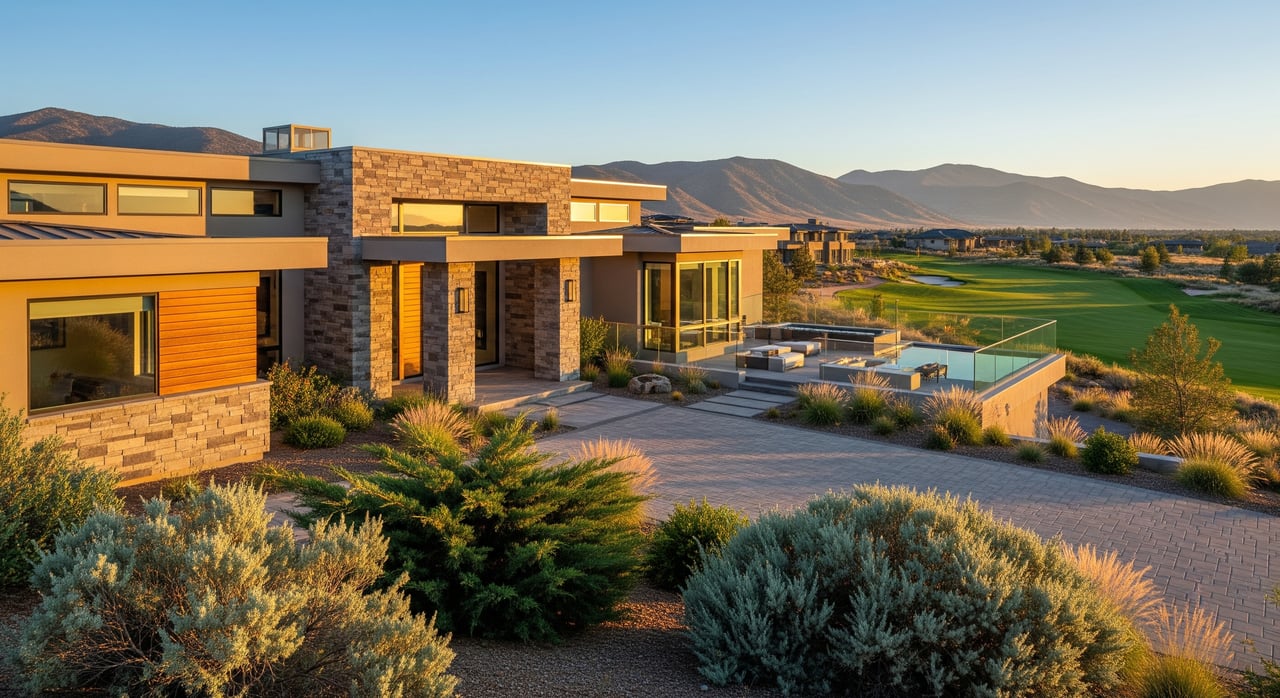
Custom estates sit on larger or view‑driven lots and are designed around the site. Expect single‑level ranch estates, Mediterranean or Tuscan influences, modern mountain styles, and contemporary glass‑forward designs. Features often include expansive terraces, walk‑out lower levels, detached casitas, oversized garages, and panoramic view rooms. Sizes vary widely, commonly from about 2,500 square feet up to 6,000 plus. Pricing in ArrowCreek typically starts above $1 million, with luxury customs reaching several million depending on site, size, finish, and views.
Styles and curb appeal you’ll notice
You’ll see a refined but varied mix across ArrowCreek. The shared thread is a natural, earth‑tone palette that complements the high‑desert setting.
- Modern and contemporary: clean lines, larger windows, and indoor‑outdoor transitions.
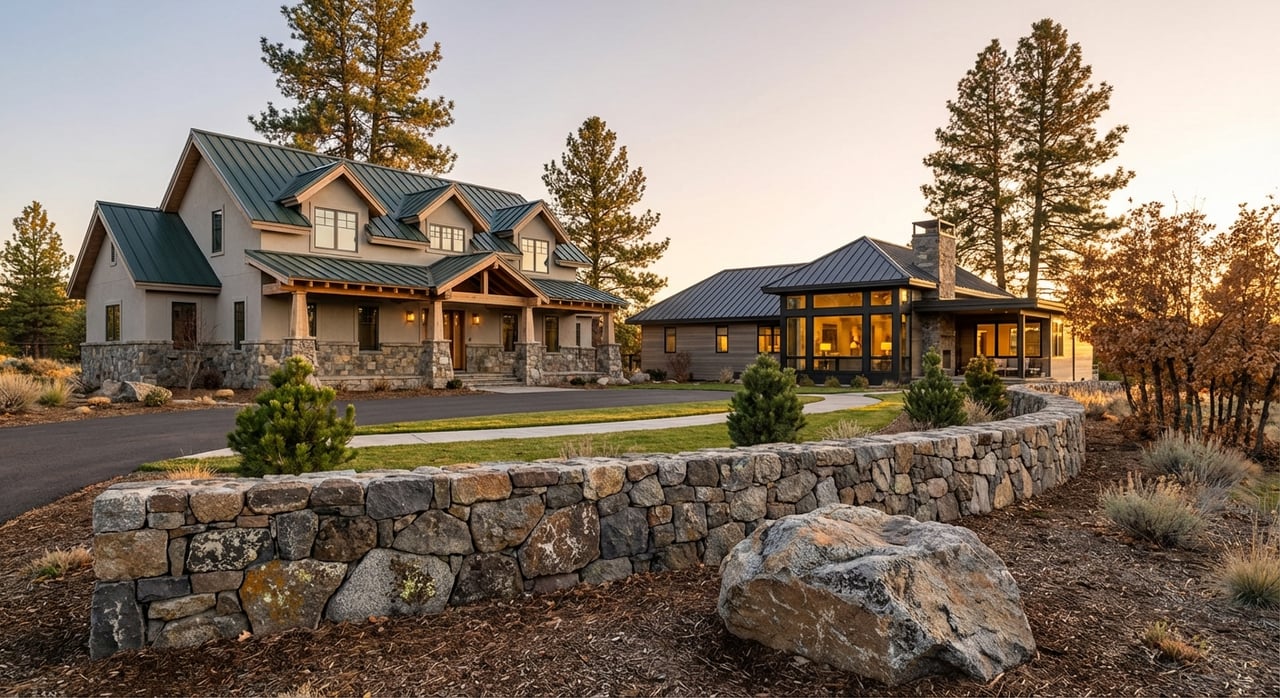
- Mountain or rustic contemporary: stone accents, warm palettes, and strong connection to outdoor rooms.
- Mediterranean or Tuscan: stucco walls, tile roofs, and arches or gentle curves.
- Select classic details: occasional Craftsman or traditional touches on older homes.
The ADRC guides more than just style. It sets what you can use on the exterior and how those materials are combined.
Approved exterior materials
- Walls: stucco, natural stone, and masonry are primary choices. Fiber‑cement or similar products may only be used as limited accents. Large, unbroken stucco walls are discouraged, so homes gain depth with stone bands, columns, or varied massing.
- Roofs: slate, concrete or clay tile, high‑grade fiberglass composition shingles, and standing seam metal with concealed fasteners are allowed. Wood shake and solid black roofing are prohibited.
- Windows and doors: wood, vinyl, and clad frames are allowed. Glass must be clear, gray, or bronze tint, not reflective or strongly colored.
You can confirm details in the ADRC Guidelines. The result is a consistent, high‑quality streetscape with articulated rooflines and materials that feel at home in the foothills.
How lots and views shape floor plans
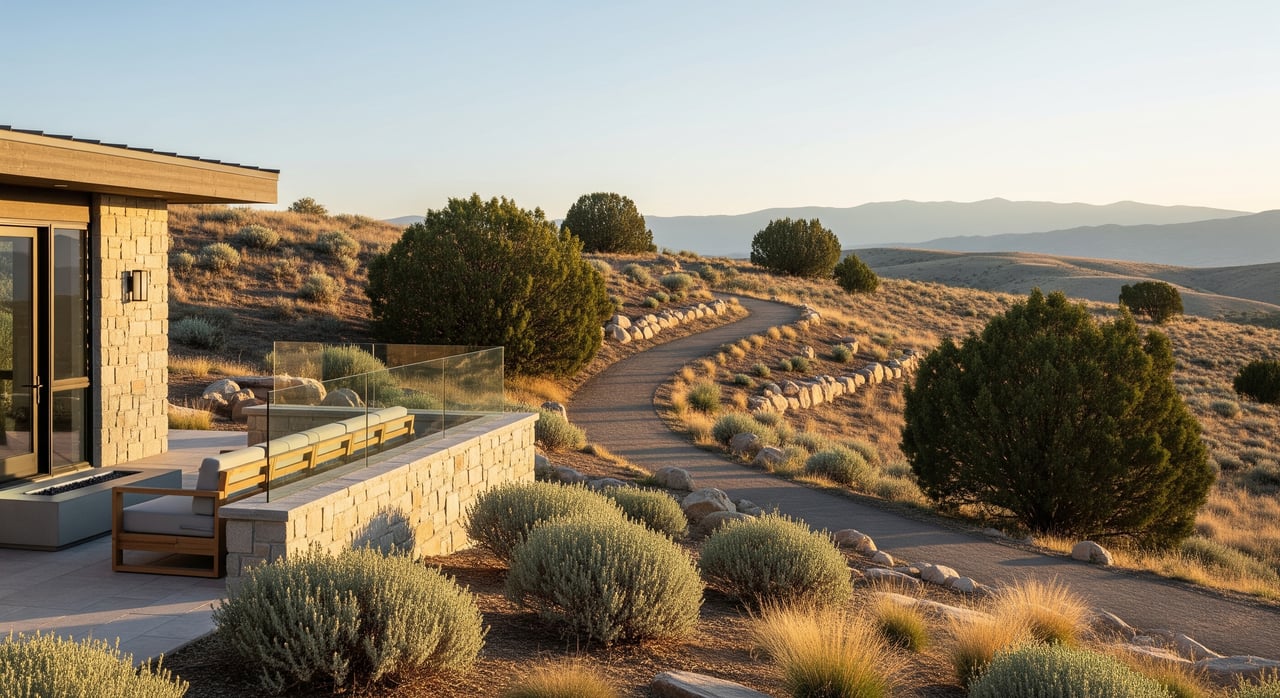
ArrowCreek’s slopes and ridges are part of the lifestyle, and the ADRC requires homes to adapt to the land. Designs must limit grading and often step with the terrain. If a lot slopes more than about four feet across the footprint, floors should step or portions of the structure should be set into the grade. If the slope exceeds roughly seven feet, a daylight or walk‑out lower level is required. That is why you see so many view terraces and lower‑level retreats.
- Ridge or steep lots: multi‑level massing, main living aimed at the primary view, large sliding or folding doors to outdoor rooms, and walk‑out levels for guest suites, recreation, or storage.
- Moderate slopes: single‑level or two‑story homes with partial walk‑outs, garages and service spaces tucked to the uphill side, and living spaces oriented downhill to capture the panorama.
- Flatter sites: more traditional single‑level ranch or two‑story footprints, sometimes with inward‑facing courtyards.
Golf‑front lots often place patios and main living toward the fairway. Club facilities and play are private to members, so visit The Club at ArrowCreek for membership options and course details.
Key ADRC rules to know before you buy or build
All exterior work, from new homes to remodels and landscaping, needs ADRC approval. New home plans must be prepared by a Nevada‑licensed architect or an approved residential designer, and they need to be wet‑sealed. Submittals are due in hard copy and PDF by the monthly deadline. The ADRC meets monthly, and major projects are expected to gain approval within a limited number of review cycles.
For forms, deadlines, and submission instructions, start with the HOA’s ADRC applications page, then review the technical requirements in the ADRC Guidelines. Planning ahead with a designer who knows ArrowCreek precedents will save time and revisions.
Landscape, fire‑safety, and solar basics
ArrowCreek lies in a fire‑sensitive area, so landscape plans must demonstrate defensible space and appropriate planting. The ADRC reviews irrigation, drainage, revegetation, and species selection to protect the community and the natural setting. Expect detailed scrutiny of your landscape plan.
Solar is welcome when installed to community standards. Panels must meet color and mounting rules, with concealed conduit. Ground mounts and mechanical equipment often require screening. Pools, sport courts, and freestanding structures also need ADRC approval. You can find the full checklist in the ADRC Guidelines.
Buyer checklist: match lifestyle to lot and style
Use this quick list to align your wish list with what ArrowCreek offers.
- Single‑level, lower‑maintenance living: Focus on flatter sites or production and semi‑custom neighborhoods nearby, where yards are smaller and plans often keep daily living on one level.
- Panoramic views and outdoor rooms: Target ridgelines or downhill view sides. Look for stepped designs with terraces and walk‑out lower levels. Expect some tradeoffs in private yard size for bigger outlooks.
- A certain exterior look: Confirm that your preferred palette aligns with ADRC standards. Think stucco plus stone, natural tones, and approved roofing. Ask for examples of approved elevations in the village you are considering.
- Plan to build or remodel: Map the ADRC steps early. You will need a Nevada‑licensed architect or approved residential designer, sealed plan sets, a materials board, a detailed landscape and irrigation plan, and timely submissions for monthly reviews.
- Resale cues: Views, golf‑front positions, larger flat estate lots, and well‑executed outdoor living tend to command premiums. Consistent ADRC standards support neighborhood cohesion and long‑term comparability.
- Club life: Membership at the club is optional and sold separately from HOA dues. Review offerings directly with The Club at ArrowCreek if golf, sport, or social access matters to your decision.
A real‑world example of hillside design
To picture how ArrowCreek homes work with the land, look at a recent custom estate example that features a walk‑out lower level, broad terraces, and glazing arranged to frame the valley and mountain backdrop. See the design moves in this custom ArrowCreek listing example. Details vary by property, yet the core idea is consistent across the community: shape the home to the slope, orient living to the view, and integrate natural materials.
Putting it together: how to choose
Start with how you live day to day. If you prioritize single‑level living and a simpler yard, a flatter site or nearby production neighborhood may fit. If views and large outdoor rooms are central, a ridge or downhill‑oriented lot with a stepped plan makes sense. If architectural control and specific materials matter, confirm that your style aligns with the ADRC palette. Finally, map your process. Whether you are buying resale, building semi‑custom, or going fully custom, the most efficient path pairs a lot choice with a plan type that respects ArrowCreek’s terrain and rules.
When you are ready to compare specific villages, lot types, or recent sales, reach out for one‑on‑one guidance. With development fluency and on‑site sales experience in Reno’s top master‑planned communities, we can help you align style, budget, and long‑term value.
Ready to tour, shortlist, or plan a build in ArrowCreek? Schedule a private, confidential consultation with Amy Keiffer with Dickson Realty to move forward with clarity.
FAQs
What home styles are common in ArrowCreek?
- Expect modern and contemporary designs, mountain or rustic contemporary, Mediterranean or Tuscan influences, and occasional classic details, all in natural, earth‑tone palettes.
What exterior materials does the HOA allow in ArrowCreek?
- The ADRC favors stucco, natural stone, and masonry for walls, with limited accent use of other materials; approved roofs include slate, concrete or clay tile, high‑grade composition, and standing seam metal.
How do ArrowCreek’s slopes affect floor plans and layouts?
- The ADRC requires site‑adaptive architecture, which often means stepped floors and walk‑out lower levels on sloped lots so living spaces face views while grading stays minimal.
Is club membership required to live in ArrowCreek?
- No; The Club at ArrowCreek is private with optional membership packages for golf, sport, or social access that are separate from HOA dues.
Can I add solar panels or a pool at an ArrowCreek home?
- Yes, with ADRC approval and compliance with placement, color, screening, and documentation standards that keep equipment discreet and visually cohesive.
What home sizes and prices are typical in ArrowCreek?
- Sizes commonly range from roughly 2,500 square feet to 6,000 plus on custom estates, with most single‑family homes priced above $1 million depending on lot, views, age, and finish.
What is the ADRC review process for new builds or major changes?
- You will submit sealed plans from a Nevada‑licensed architect or approved residential designer, a materials board, and a full landscape plan by monthly deadlines for staged ADRC review and approval.